Industrial Robots

Resin Lens Production Automation

Standalone machines, process cells and integrated automation for resin lens manufacturing.

Discuss This Product

Line equipment · Not a full-line photograph

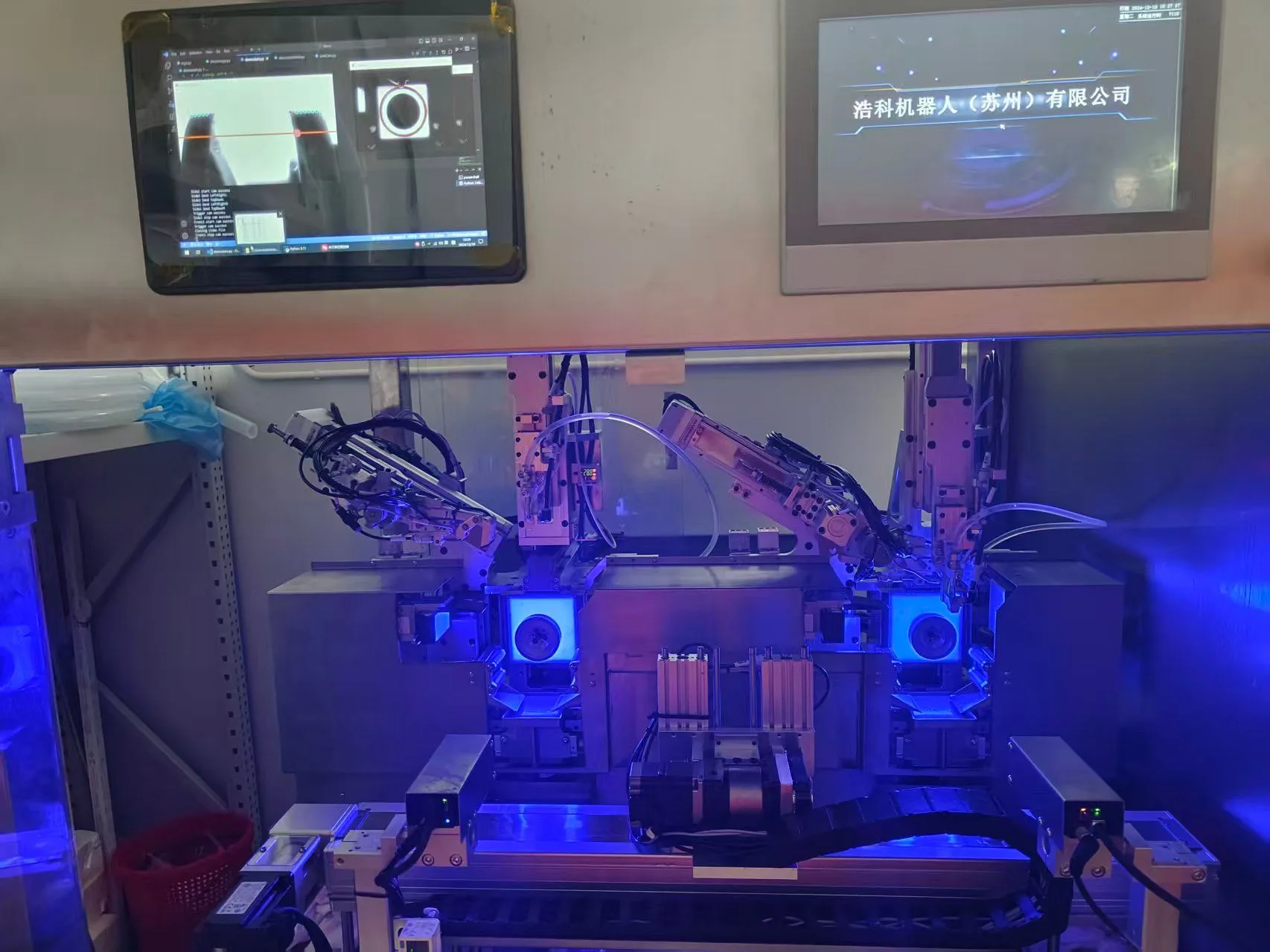
Resin Lens Production Automation — equipment photograph
Mold Assembly Loading & Unloading
Resin Lens Production Automation — equipment photograph
Resin Lens Casting Machine
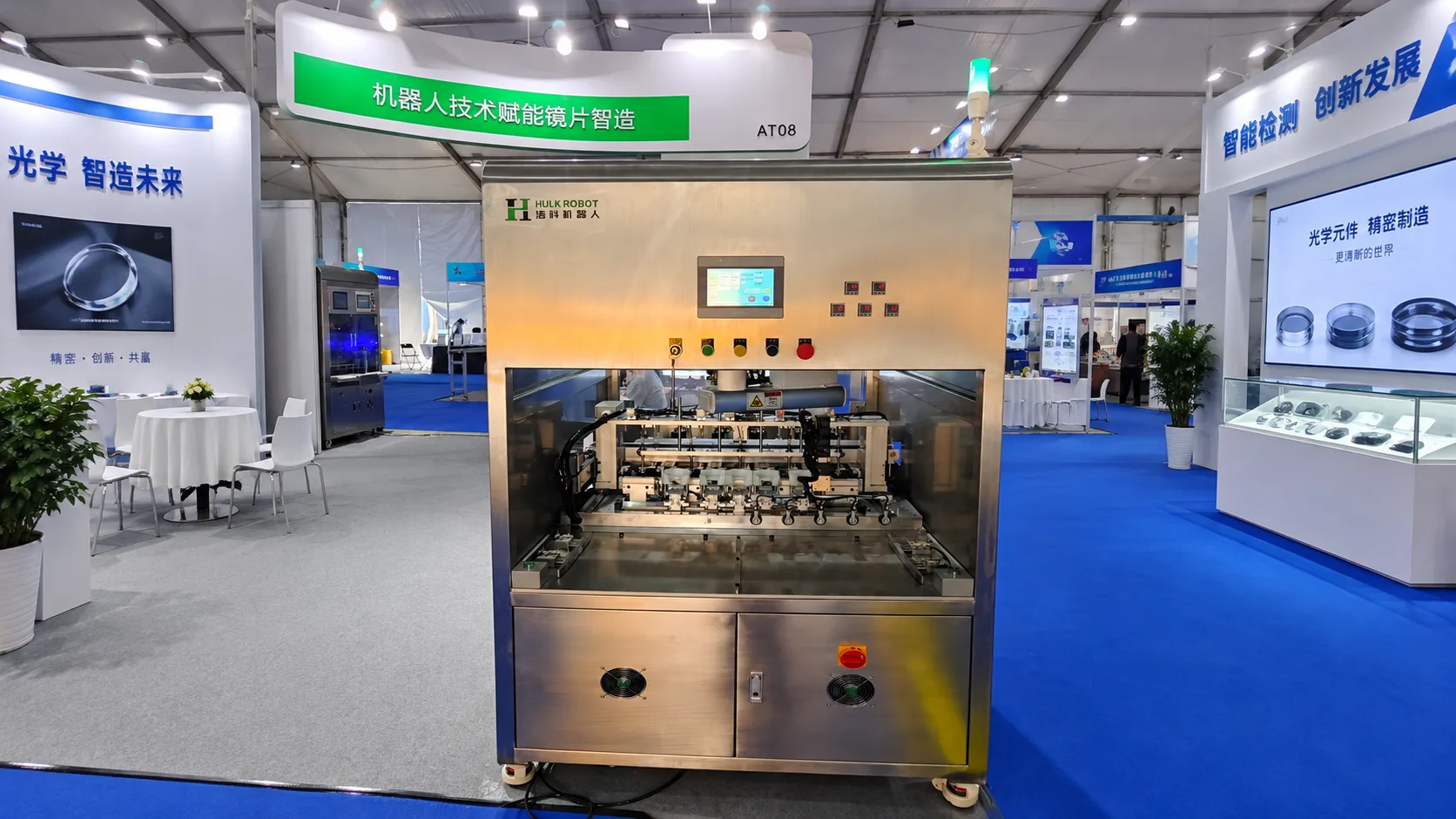
Resin Lens Production Automation — equipment photograph
Tape Removal Machine
Resin Lens Production Automation — equipment photograph
Lens Demolding Machine
Resin Lens Production Automation — equipment photograph
Edging Machine Loading & Unloading
Resin Lens Production Automation — equipment photograph
Resin Lens Edging Machine

SELECTION AT A GLANCE

Selection at a Glance

Check the workpiece and process before discussing equipment configuration. Suitability depends on sample and process assessment.

Workpieces
  • Resin lens manufacturing
Processes
  • Mold Assembly Loading & Unloading
  • Resin Lens Casting Machine
  • Tape Removal Machine
  • Lens Demolding Machine
  • Edging Machine Loading & Unloading
  • Resin Lens Edging Machine
  • Process coordination
  • Equipment interface integration
  • Production-line configuration assessment
Integration Assessment
  • Standalone machine
  • Process cell
  • Integrated production line

Confirm integration scope against loading methods, existing interfaces, site layout and cycle time.

Information to Prepare
  • Lens material, specification range and current manufacturing process
  • Processes to automate, existing equipment interfaces and site conditions
  • Current output, target cycle time and quality acceptance criteria

OVERVIEW

Product Overview

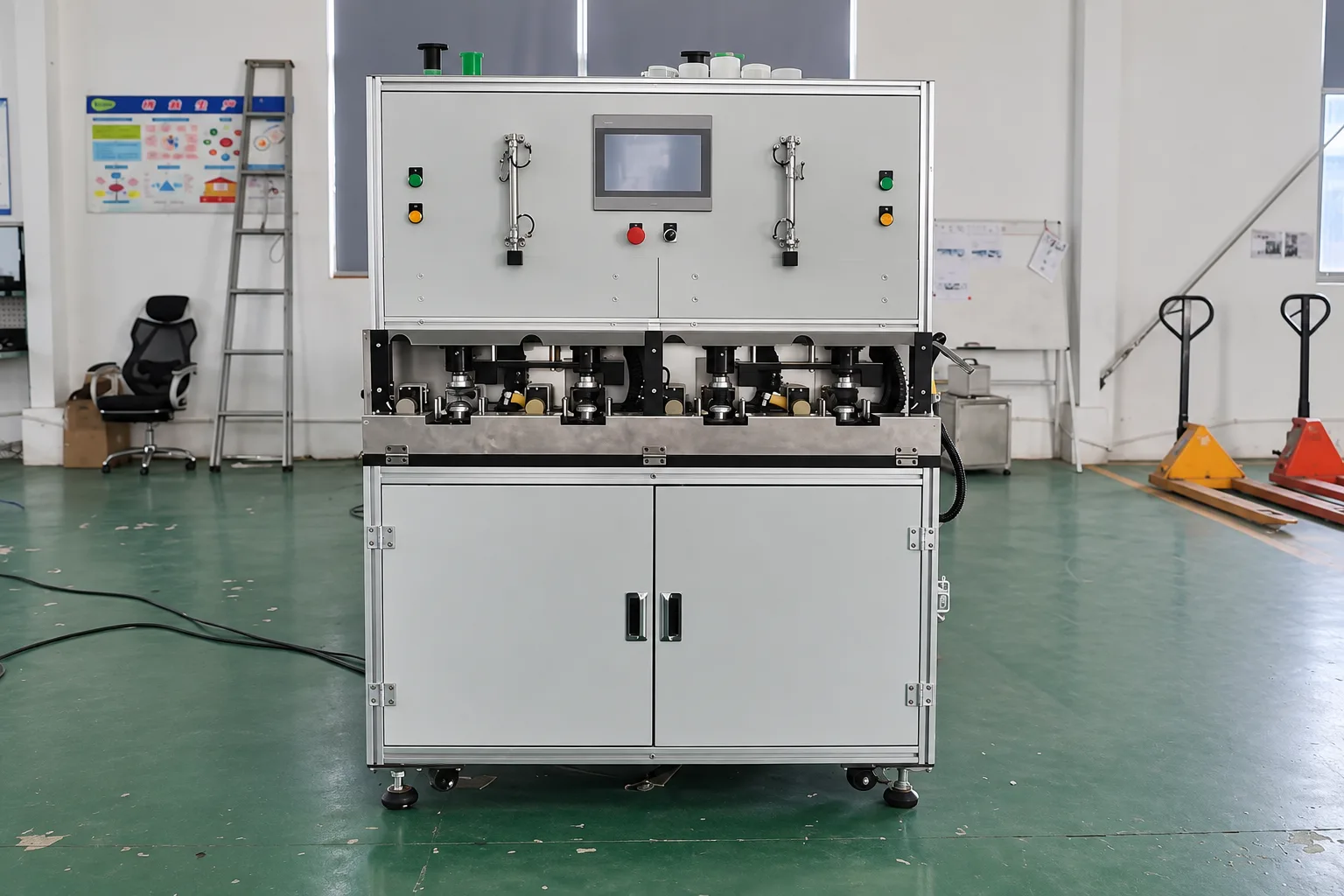
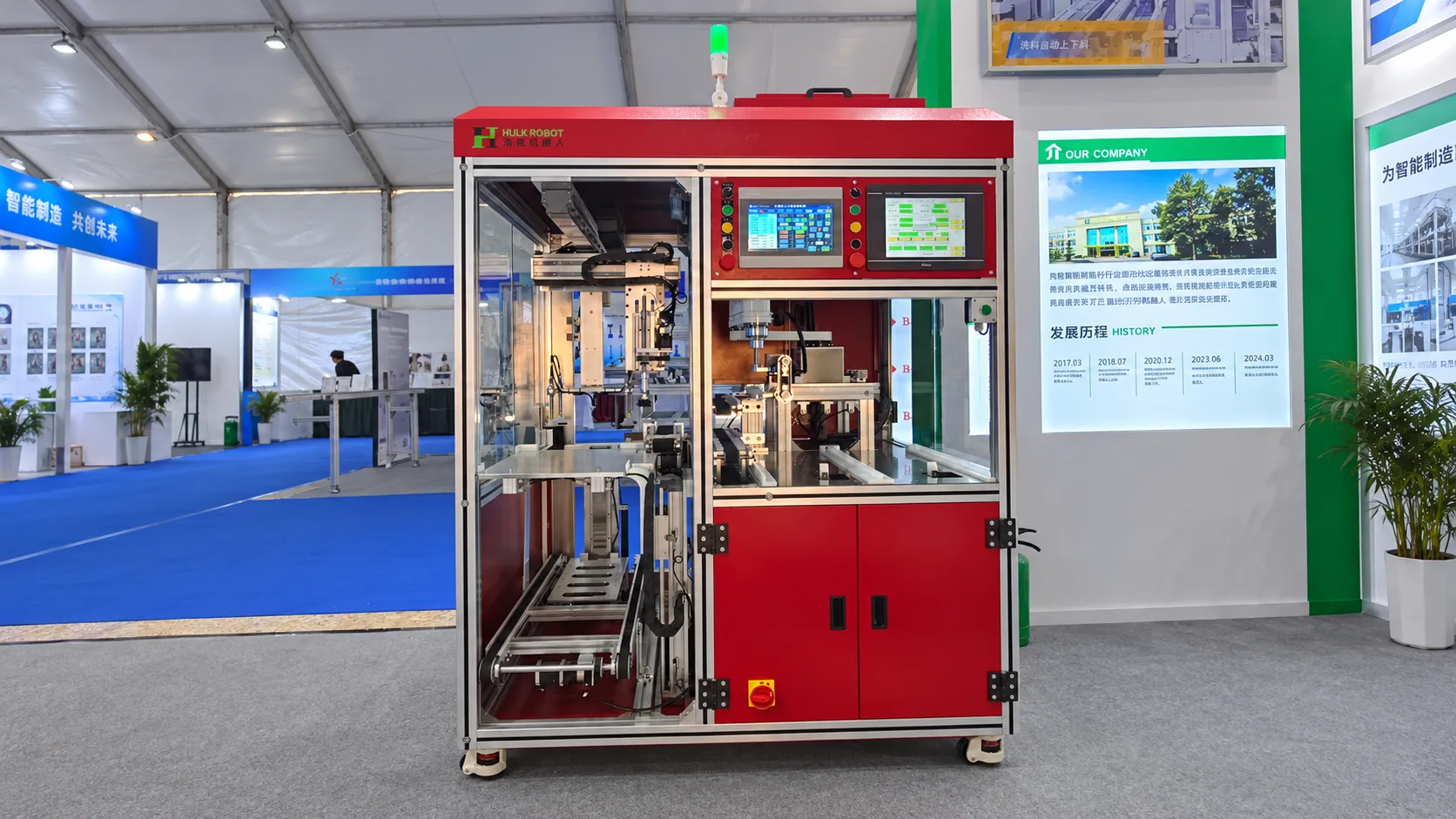
HULK ROBOT provides standalone machines, process cells and integrated production-line solutions for resin lens manufacturing. The six equipment types shown are mold assembly handling, lens casting, tape removal, demolding, edging handling and edging. Each photograph represents its own process equipment, not a panoramic view of one delivered line.

Can one process be automated first?

Yes. Start with a standalone machine or process cell rather than replacing the entire line. Identify handling, tray-change or process-waiting issues, then confirm interfaces and upstream/downstream cycle times.

How are the six types combined?

The final combination depends on the process route, material condition, tray specifications and layout. Mold collection after demolding, lens edging and finished-part collection must be considered together. Individual machines' nominal output figures must not be treated as the throughput of an integrated line.

What is needed for an assessment?

Provide lens and mold specification ranges, tray photographs or drawings, the process flow, existing equipment information, target cycle time, floor space and the main issues. Begin with a review of the information, then determine whether samples and an on-site assessment are needed.

How should capacity figures be interpreted?

The figures shown are from existing company equipment documentation. Lens specifications, process requirements, handling, tray changes and upstream/downstream waiting affect effective throughput. Agree on samples, test conditions, quality criteria and acceptance methods before implementation; actual performance is subject to sample tests and the project technical agreement.

Process and selection guides

Individual equipment

Lens demolding process-line footage

This shows the demolding section of resin lens automation, not a complete configuration covering every process.

Watch the demolding process line — Douyin, Chinese content

PROCESS & MODULES

Equipment Modules

Resin Lens Production Automation — equipment photograph
Mold Assembly Loading & Unloading

Mold Assembly Loading & Unloading

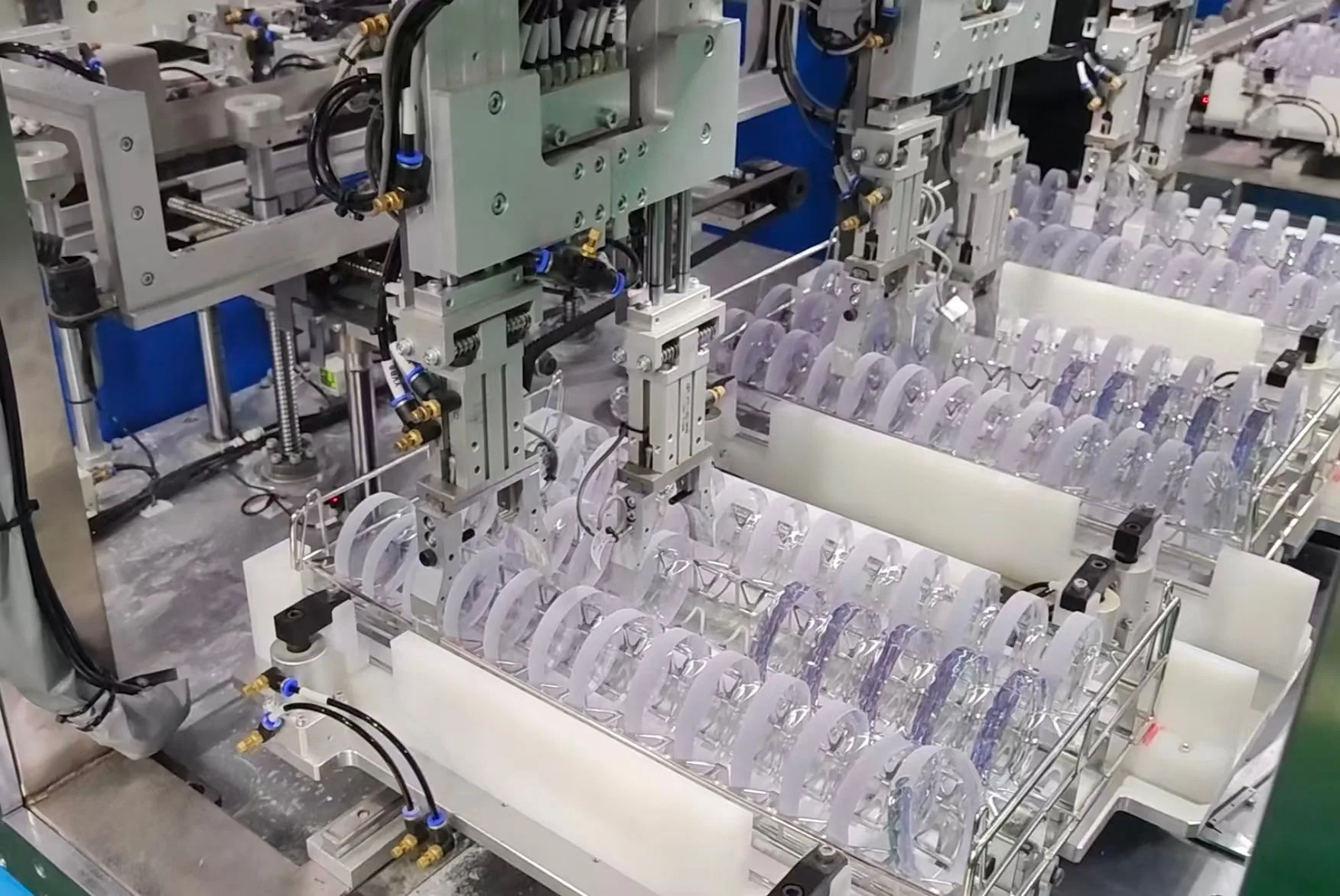
Automated loading and unloading for mold assembly, with a robot serving the assembly machine. The existing specification states at least 400 lenses/hour and storage for 12 unloading trays. For small batches, the operator enters the assembly quantity on the touch panel; the robot follows the setting and switches unloading trays automatically. One operator can attend three machines.

Resin Lens Production Automation — equipment photograph
Resin Lens Casting Machine

Resin Lens Casting Machine

Fully automatic resin lens casting, available in two-station or four-station configurations. The four-station configuration is specified at 700 lenses/hour. Automatic loading and unloading modules are optional. Automatic loading holds 12 trays; unloading can accommodate inclined, vertical and flat trays.

Resin Lens Production Automation — equipment photograph
Tape Removal Machine

Tape Removal Machine

Removes sealing tape from cured resin lens molds. The machine accommodates two trays; the operator changes trays. The existing specification states 1,200 mold tape-removal operations/hour.

Resin Lens Production Automation — equipment photograph
Lens Demolding Machine

Lens Demolding Machine

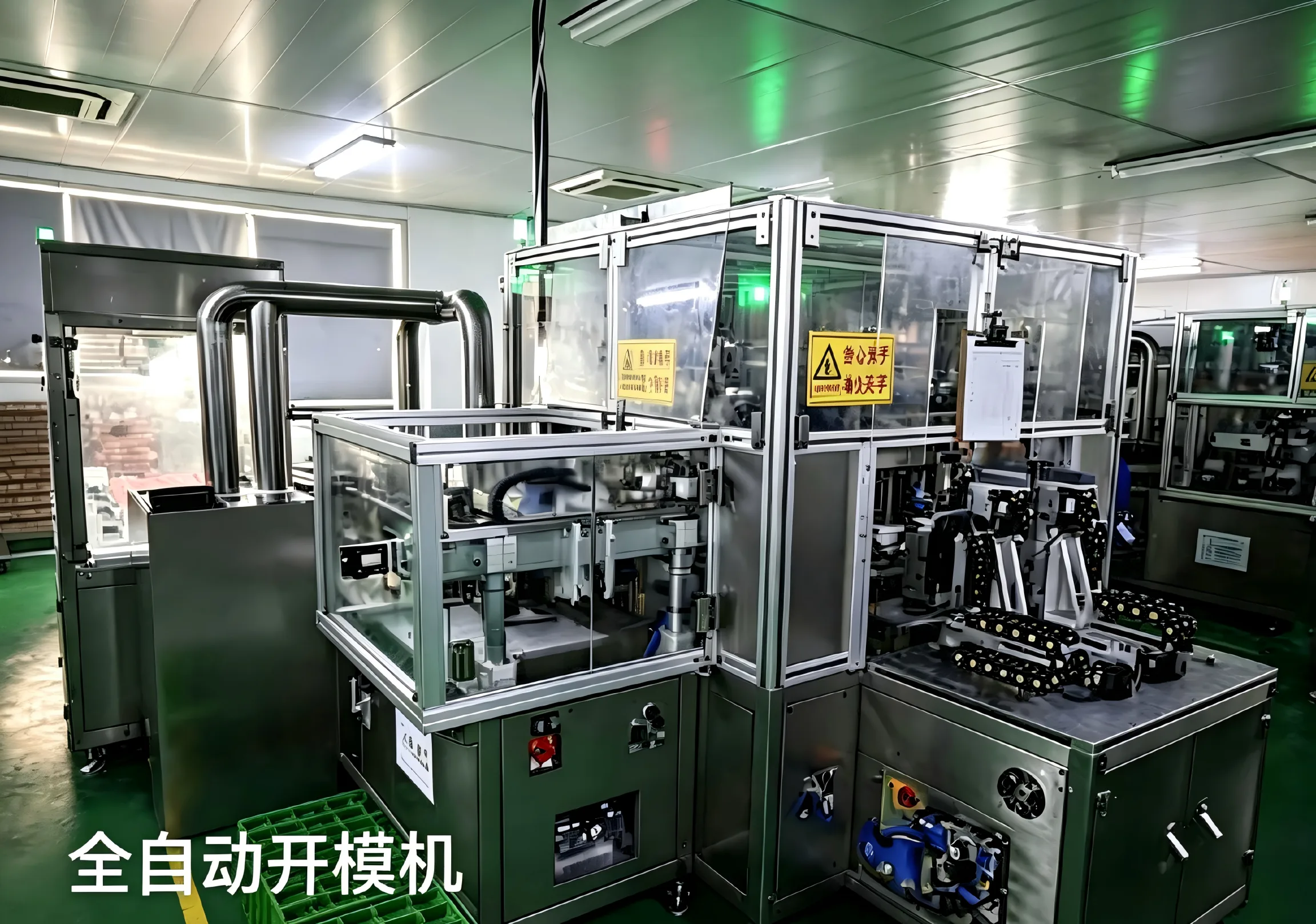
Demolds resin lenses at approximately 1,100 lenses/hour. It can be combined with tape removal, automatic mold tray loading, edging loading/unloading and edging equipment to connect tape removal, demolding, separate A/B mold collection, lens edging and finished-lens collection.

Resin Lens Production Automation — equipment photograph
Edging Machine Loading & Unloading

Edging Machine Loading & Unloading

Feeds material into and removes material from an edging machine. It accommodates two trays and is specified at 900 loading/unloading operations/hour. One operator can attend three to four machines, depending on the production arrangement.

Resin Lens Production Automation — equipment photograph
Resin Lens Edging Machine

Resin Lens Edging Machine

Edges resin lenses at approximately 900 lenses/hour. Programmable upper and lower chamfering allows the A and B sides to be chamfered separately or simultaneously. Chip collection removes debris cleanly to avoid entanglement and blockage inside the machine.

ENGINEERING & DELIVERY

Delivery & Assessment

Delivery Options

  • Standalone machine
  • Process cell
  • Integrated production line

Assessment Factors

  • Product specifications
  • Process steps
  • Cycle time
  • Existing equipment interfaces
  • Site conditions

Project Process

  1. Requirements discussion
  2. Sample and process assessment
  3. Solution design
  4. Integration and delivery
  5. Service and support

START WITH YOUR SAMPLE

Sample & Process Assessment

The information below helps us assess equipment suitability and process requirements. Performance and acceptance criteria must be confirmed through sample testing.

  • Lens material, specification range and current manufacturing process
  • Processes to automate, existing equipment interfaces and site conditions
  • Current output, target cycle time and quality acceptance criteria

This link opens your email app; nothing is sent automatically. Confirm shipping details before sending physical samples. Do not send unredacted customer data.

TALK WITH HULK ROBOT

Start with your process.
Let’s define your next intelligent equipment solution.

13962620333zjq@hulkbot.comTaicang, Suzhou, Jiangsu, China
Contact Us